
Meta Description: Complete guide to the Manaslu Circuit Trek in Nepal. 8,163m peak, 177km remote wilderness, permit requirements, day-by-day itinerary, and insider tips for 2026.
Basanta Subedi is a Pokhara-based trekking guide with over 6 years of experience leading treks across Nepal, including multiple successful completions of the Manaslu Circuit Trek. He specializes in high-altitude trekking logistics, permit arrangements, and personalized itineraries. He is trained in Wilderness First Aid and has guided both domestic and international trekkers safely through remote Himalayan regions.
Mount Manaslu stands as the world’s eighth-highest peak at 8,163 meters, yet it remains vastly overshadowed by its more famous neighbors-Everest and Annapurna. For trekkers seeking authentic Himalayan wilderness without the crowded tea houses of mainstream circuits, the Manaslu Circuit Trek is Nepal’s best-kept secret.
This isn’t just another high-altitude trek. The Manaslu Circuit is a 177-kilometer pilgrimage through Tibet-influenced Buddhist villages, pristine glacial valleys, and the formidable Larkya La Pass (5,106m)-one of the Himalayas’ most dramatic mountain crossings. Over 12 days, you’ll transition from tropical sub-Himalayan forests (890m) to wind-scoured alpine terrain, experiencing a complete ecosystem transformation while earning bragging rights few trekkers possess.

Key facts about Manaslu:
-
- Elevation gain/loss: 890m → 5,106m → back to 1,860m
-
- Total distance: 177 kilometers
-
- Duration: 12 days (10 days trekking, 2 day driving)
-
- Best seasons: September-October, March-May
-
- Difficulty: Very challenging
-
- Permit cost (2026): $75-100 USD
-
- Guide requirement: Mandatory (government-licensed)
Phase 1: The Gateway Journey (Days 1-3)
Day 1: Kathmandu to Machhakhola (160km / 7-8 hours)
Your Manaslu adventure begins with a 160-kilometer overland drive from Kathmandu (Nepal’s capital) to Machhakhola (890m), the official entrance portal to the Manaslu Conservation Area.
Route breakdown:
-
- Departure point: Kathmandu tourist district (Thamel)
-
- Mid-point lunch: Malekhu Bazaar (vibrant market on the Prithvi Highway)
-
- Road conditions: Mix of improved highways transitioning to deteriorating off-road tracks
-
- Duration: 7-8 hours depending on weather and road quality
What to expect: You’ll witness Nepal’s geography transform from urban sprawl → agricultural flatlands → foothills, with the Budhi Gandaki River appearing in the distance. Prayer flags, traditional Nepalese villages, and rhododendron forests signal your entry into the Manaslu region.
Accommodation: Machhakhola lodge (basic but clean)
Day 2: Machhakhola to Jagat Bagar (22km / 6-7 hours)
Your first official trekking day introduces you to the Budhi Gandaki River gorge-a 22-kilometer showcase of waterfalls, forests, and Himalayan geology.
Highlights:
-
- Tatopani hot springs (midway point): Natural geothermal pools; ideal for post-trek recovery
-
- Lush rhododendron and sal forests (particularly stunning in spring: March-May)
-
- Suspension bridges spanning the turquoise glacier-fed river
-
- Gurung villages featuring traditional stone architecture and prayer wheels
Altitude progression: 890m → 1,340m (+450m)
Checkpoint: Jagat (1,340m) serves as the official Manaslu Conservation Area entrance checkpoint. Your permits are verified here. Local staff are friendly and often share fascinating stories about the region’s history.
Accommodation: Jagat Bagar lodge (upgraded from Day 1)
Day 3: Jagat to Deng (11-15km / 6-7 hours)
This day marks your transition from the lower valleys into genuine mountain wilderness. The trail becomes progressively steeper and increasingly remote.
Notable villages & cultural sites:
-
- Salleri (Gurung settlement with traditional architecture)
-
- Philim (first strong Tibetan Buddhist architectural influence)
-
- Sirdibas (lunch stop with panoramic Sringi Himal views)
Physical changes: The air thins noticeably. Vegetation shifts from tropical rhododendron to alpine scrub. Your body begins serious altitude adaptation.
Altitude: 1,340m → 1,680m (+340m)
Cultural significance: Few independent trekkers reach this region; you’ll encounter primarily local farmers and guided groups. This isolation is intentional-it preserves the region’s authenticity.
Accommodation: Deng tea house

Phase 2: The Tibetan Heartland (Days 4-5)
Day 4: Deng to Namrung (19km / 8-9 hours)
The Deng to Namrung stretch is considered one of the trek’s most difficult yet rewarding days. You’re now in genuine Tibetan Buddhist territory where monasteries, prayer wheels, and Buddhist iconography become your constant companions.
Challenges:
-
- Narrow river gorges requiring careful footwork and mental focus
-
- Dense bamboo and rhododendron forests (jungle-like at this altitude)
-
- Multiple suspension bridge crossings (some with dramatic drops)
-
- Largest single-day elevation gain: 1,680m → 2,660m (+980m)
Cultural highlights:
-
- Ghap village (lunch stop with Gurung-Tibetan fusion architecture)
-
- Sacred prayer flags and stone stupas appearing more frequently
-
- Gompa (monastery) sightings along the trail
Why it’s tough: The 9-hour duration combined with 980m elevation gain and the psychological challenge of navigating narrow gorges tests both your body and mind.
Key landmark: Namrung (2,660m) hosts ancient Buddhist monasteries and provides the first unobstructed view of Mount Manaslu’s north face-a moment many trekkers describe as spiritually transformative.
Accommodation: Namrung tea house
Day 5: Namrung to Shyala (13km / 5-6 hours)
After yesterday’s exertion, today is lighter-but the views intensify dramatically. You’re now in the direct shadow of Mount Manaslu.
Route highlights:
-
- Glacial river valley with increasingly alpine landscape
-
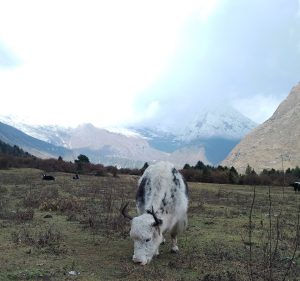
- High-altitude grasslands with yak herding communities
-
- Rhododendron and pine forests (seasonal variation)
Cultural checkpoint: Lho (3,010m) features the Ribung Monastery, one of the region’s most important Buddhist spiritual sites. The monastery sits against Manaslu’s backdrop, creating one of Nepal’s most photogenic moments.
Altitude: 2,660m → 3,500m (+840m)
Shyala (3,500m): A stunning settlement surrounded by 360-degree panoramas including Himal Chuli (7,893m), Peak 29, and the Manaslu massif.
Accommodation: Shyala tea house (excellent standards for this altitude)
Phase 3: Acclimatization & The Sacred Peak Zone (Days 6-9)
Day 6: Shyala to Samagaun + Pungyen Ghumba Hike
Morning trek: Shyala to Samagaun (3km / 1.5 hours)
Samagaun (3,530m) is the largest settlement on the entire circuit and serves as the primary base camp for Manaslu climbing expeditions. This living Buddhist community (not a tourist village) features monks, local gompas, and prayer wheels integrated into daily village life.
Afternoon challenge: Pungyen Ghumba (14km round-trip / 4-5 hours)
The Pungyen Ghumba is a high-altitude monastery at Manaslu’s north face base. This acclimatization hike includes steep stone staircases leading to a hidden plateau surrounded by a dramatic amphitheater of peaks.
What you’ll experience:
-
- Ancient monasteries on hidden plateaus
-
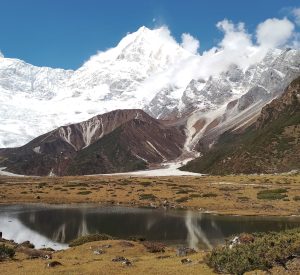
- Sacred ponds (frozen in winter; brilliant blue in summer)
-
- Yak and sheep herds roaming high-altitude meadows
-
- Direct Manaslu north face views close enough to feel the mountain’s presence
Altitude: 3,530m → 4,100m (+570m)
Accommodation: Samagaun tea house (best on the circuit)
Day 7: Acclimatization Day — Manaslu Base Camp Hike
This is your official rest day, but the Manaslu Base Camp hike is the trek’s single most strenuous day.
Manaslu Base Camp hike (13km round-trip / 5-6 hours)
Route: Samagaun → Birendra Lake (4,300m) → stone staircase ascent → Base Camp (4,800m)
The legendary staircase: Approximately 600+ stone steps carved directly into mountainside. This section separates casual trekkers from serious mountaineers.
Manaslu Base Camp (4,800m): Standing here, you’re at the staging point for climbers attempting Manaslu’s 8,163m summit. The vista shows a vast snowfield surrounded by the Manaslu range’s satellite peaks.
Why this day matters for acclimatization:
-
- Gain 1,270m in a single day, forcing your body’s full altitude adaptation
-
- Return to lower elevation the same day-optimal acclimatization mechanism
-
- Psychological victory: “I reached 4,800m”
Pro tip: Start at dawn (4:00 AM) to witness sunrise illuminating Manaslu’s summit—unforgettable.
Accommodation: Samagaun tea house
Day 8: Samagaun to Samdo (8km / 4 hours)
A short, manageable day designed for gradual acclimatization before entering the high alpine zone.
The trail felt relatively easy until the wind picked up near Samdo. I remember stopping to talk with my friend, who pointed toward the Tibetan border and shared stories about cross-border trade routes. That moment made the trek feel more cultural than just physical.
Route characteristics:
-
- Well-marked trail with minimal technical difficulty
-
- Lush grasslands (spring/summer) or sparse alpine meadows (autumn)
-
- Steady, manageable elevation gain
Altitude: 3,530m → 3,860m (+330m)
Samdo (3,860m): A peaceful settlement serving as the last “normal” tea house before entering barren, windswept terrain. Samdo offers hot showers (solar-heated), solid food, and adequate lodging.
Afternoon acclimatization hike: Light 1-2 hour ridge hike spotting Himalayan tahr (wild goats) and blue sheep on rocky slopes.
Accommodation: Samdo tea house (clean, friendly staff)
Day 9: Samdo to Dharmasala (7km / 4 hours)
Your final approach to Larkya La. The landscape becomes increasingly barren and exposed. Trees disappear. You’re now in the true high alpine zone.
Route highlights:
Larkya Bazaar (4,200m): A small high-altitude trading hub-a fascinating anachronism. Merchants sell essential supplies while sitting at a “market” at 4,200m.
Sloping uphill terrain: After Larkya Bazaar, the trail becomes increasingly exposed, passing through active landslide zones. Your guides know which sections are safe.
Altitude: 3,860m → 4,460m (+600m)
Dharmasala (4,460m) – also called Larkya Phedi: Your final camp before Larkya La. This is a completely barren, windswept outpost. You’ll sleep in tents (not lodge buildings). The cold is intense; nighttime temperatures drop to -15°C or lower.
Final preparations: Charge batteries, refill water bottles, check gear. Many trekkers take altitude medication (Diamox) starting today.
Accommodation: High-altitude tent camp
Phase 4: Crossing the Gateway to Paradise (Days 10-12)
Day 10: Dharmasala to Bhimtang via Larkya La Pass (22km / 9 hours)
This is the crown jewel day-crossing Larkya La (5,106m), one of the Himalayan trekking world’s most dramatic alpine passes.
3:30 AM wake-up call
You wake in darkness at -12°C. Down jacket. Thermal layers. Waterproof pants. Gloves. Hat. Boots. Headlamp on. Time to climb.
Why start at 3:30 AM?
-
- Wind management: Early morning winds are calmer. Afternoon winds exceed 60 km/h on the pass
-
- Snow conditions: Early morning snow is firmer and more stable
-
- Psychological advantage: Reaching the pass while others sleep feels sacred
The ascent: Dharmasala to Larkya La (5,106m) – 3-4 hours
The first hour is relatively straightforward-you’re following a marked trail in headlamp light surrounded by fellow trekkers (usually 20-50 people on peak season days).
Around 5,000m, the trail becomes steeper. Your pace slows to “pressure breathing”- deliberate, controlled inhalation and exhalation.
Key landmarks:
-
- Glacier lake (4,800m): A stunning frozen or partially frozen lake under moonlight
-
- Prayer flags marking the approach
-
- Stone cairns indicating the trail boundary
Reaching Larkya La Pass (5,106m)
The pass is marked by a large stone cairn covered in prayer flags. Upon arrival (usually 7:00-8:00 AM), sunrise illuminates the entire Himalayan range.
What you’ll feel:
-
- Euphoria: You’ve crossed one of the highest trekking passes in Nepal
-
- Exhaustion: Your body is at its physical limit
-
- Awe: 360-degree panorama includes Manaslu, Ganesh Himal, Annapurna II, and the Tibetan plateau
Pro tip: Wear UV sunglasses and SPF 50+ sunscreen. Snow glare is intense enough to cause snow blindness.
The descent: Larkya La to Bhimtang (5,106m → 3,720m) – 4–5 hours
The descent is steep, snowy, and demanding. Accidents occur when tired trekkers lose concentration. Your guide uses crampons and ice axes if needed.
Descent landmarks:
-
- Alpine meadows (4,500m): First vegetation reappears
-
- Stream crossings: Snowmelt creates swift, cold water crossings
-
- Rhododendron and pine forest (4,000m): Tree coverage returns
Bhimtang (3,720m): After a grueling 9-hour day, you’ve done it-you’ve crossed Larkya La.
Key stats for Day 10:
-
- Elevation gain: 640m (3,860m → 5,106m)
-
- Elevation loss: 1,386m (5,106m → 3,720m)
-
- Total distance: 22 kilometers
-
- Physical demand: Extreme
Accommodation: Bhimtang lodge (hot food, hot shower, solid rest)
Day 11: Bhimtang to Dharapani (19km / 7 hours)
After yesterday’s epic exertion, today is a long descent through increasingly lush landscape. Your knees will feel the impact, but your spirit will soar.
Route characteristics:
-
- Steady downhill terrain
-
- Lush rhododendron and pine forests
-
- Multiple high suspension bridges
-
- Stream crossings (the Budhi Gandaki River reappears)
Altitude: 3,720m → 1,860m (-1,860m descent)
Dharapani (1,860m): A charming village at the junction of the Manaslu Circuit and Annapurna Circuit. This marks the end of the remote wilderness section. The contrast with crowded Annapurna trails is stark.
Accommodation: Dharapani lodge (upgraded comforts)
Day 12: Dharapani to Pokhara (190km / 9 hours)
Your final day is a 190-kilometer jeep drive from the mountains to Pokhara (823m), Nepal’s lakeside adventure capital.
Route breakdown:
-
- Dharapani to Besisahar (90km / 4 hours): Mountain roads, decent highway
-
- Lunch stop: Besisahar bazaar town
-
- Besisahar to Pokhara (100km / 5 hours): Transition from mountains to foothills to valley
The landscape gradually transitions from alpine terrain to agricultural valleys. Rice paddies appear. You’ve descended 4,283 meters from your highest point.
Accommodation: Pokhara hotel (reserved by your tour operator)

Permit & Guide Requirements for Manaslu Circuit Trek(2026 Update)
The Manaslu region is classified as a Restricted Area. You cannot trek independently.
Mandatory requirements:
-
- Government-licensed Nepali guide: Required. Cost: $30-50 USD/day
-
- Minimum group size: 2 trekkers minimum (solo trekking prohibited)
-
- Three permits required:
-
- Manaslu Restricted Area Permit (RAP): $75-100 USD
-
- Three permits required:
Total permit cost: ~$165-190 USD per person
The cost of the Manaslu Circuit Trek varies depending on your travel style and season. On average, trekkers spend between $25–$70 per day, including accommodation and meals.
How to obtain permits:
-
- Through a trekking agency (easiest): Agencies handle paperwork, provide guides, arrange porters. Cost: $1,200-2,000 USD for 12-day package
-
- Independently in Kathmandu: Visit immigration office in Thamel; takes 1-2 days. Then hire a guide separately
Guide selection: Choose guides with at least 5+ Manaslu Circuit completions. They know which tea houses are safest, how to navigate altitude sickness, and emergency evacuation routes.
Gear Checklist: The Manaslu Essentials
Extreme altitude range (890m to 5,106m) demands strategic packing.
| Category | Item | Specification | Why It’s Essential |
| Insulation | Down Jacket | -10°C rated minimum | Dharmasala nights drop to -15°C |
| Thermal Base Layers | Merino wool/synthetic | Moisture-wicking prevents hypothermia | |
| Fleece Midlayer | 200-300g | Adjustable insulation for changing conditions | |
| Sleep | Sleeping Bag | -15°C rated minimum | Unheated teahouses at 4,000m+ freeze |
| Sleeping Pad | 5cm+ thickness | Insulates from frozen ground | |
| Footwear | Trekking Boots | Waterproof, high-grip | Snow, ice, rocky terrain require serious boots |
| Crampons/Microspikes | 10–12 point | Larkya La often under 1-2m of snow | |
| Gaiters | Waterproof | Prevents snow entering boots | |
| Sun Protection | UV Sunglasses | Category 4, high-altitude | Snow glare at 5,106m damages eyes (snow blindness) |
| SPF 50+ Sunscreen | Broad spectrum | Altitude doubles UV exposure | |
| Sun Hat/Balaclava | Wool/synthetic | Protects scalp and face | |
| Hydration | Hot Water Bottle | Insulated | Bed warmer; prevents hypothermia |
| Water Bottles | 2+ liters capacity | Altitude dehydration is rapid | |
| Water Purification Tablets | Or portable filter | Tea house water may contain bacteria | |
| Health | First Aid Kit | Blister supplies, pain relievers | Nearest hospital is 2+ days’ walk away |
| Diamox (Acetazolamide) | Doctor’s prescription | Reduces altitude sickness severity | |
| Headlamp | Rechargeable, 2+ modes | 3:30 AM wake-up on Day 10 | |
| Other | Trekking Poles | Collapsible, cork handles | Reduces knee strain on descents |
| Backpack | 50–65L capacity | Comfortable hip belt essential | |
| Rain Jacket/Pants | Waterproof, breathable | Afternoon thunderstorms common Sept–Oct |
Packing notes:
-
- Keep pack under 12kg (26 lbs); hire porter for additional supplies
-
- Altitude-specific items (down jacket, sleeping bag, crampons) are non-negotiable
-
- Include 2-3 pairs merino wool socks and snacks (chocolate, nuts, energy bars)
Recovery & Celebration in Pokhara
After 12 days in extreme conditions, intentional recovery is essential.
Food: Nutritional Recovery
Nanglo Thakali Bhancha Ghar (Lakeside area)
-
- Specialty: Mutton curry with unlimited dal bhat (lentil rice)
-
- Why: Post-trek, your body craves protein and carbohydrates
-
- Cost: 400-600 NPR (~$3-5 USD)
-
- Tip: Arrive early; seats fill by noon
Old Mike’s Kitchen (Lakeside)
-
- Specialty: Post-trek breakfast-pancakes, omelets, fresh fruit, strong coffee
-
- Cost: 500-1,000 NPR (~$4-8 USD)
-
- Timing: Perfect for Day 12 arrival
Relaxation: Physical & Mental Healing
Jiva Cafe and Spa (Quiet garden location)
-
- Specialty: Ayurvedic massage for trekker recovery
-
- Services:
-
- Swedish massage: 60 min = 2,500 NPR (~$20 USD)
-
- Ayurvedic oil massage: 90 min = 3,500 NPR (~$28 USD)
-
- Services:
-
- Booking: Arrive by 10 AM for afternoon slots
-
- Pro tip: Book Abhyanga (Ayurvedic) massage for post-exertion recovery
Evening Spiritual Practice
Arati Ceremony at Phewa Lake Ghats (Daily at sunset)
A Hindu ritual of offering prayers to water. The ceremony includes oil lamps, bell-ringing, and Sanskrit mantras (20-30 minutes).
Why it matters after trekking Manaslu:
-
- Spiritual closure: You’ve completed a pilgrimage through Buddhist and Hindu sacred sites
-
- Community: Stand alongside Nepali families, other trekkers, and spiritual seekers
-
- Humility: Simple ceremony grounds you in something larger than ego
Timing: Sunset ~5:45-6:15 PM (season-dependent) Cost: Free (donations appreciated)
Training Before You Go
Most people require 6–8 weeks of conditioning.
Pre-trek training schedule:
-
- Weeks 1–2: 30-45 min cardio 3x/week; 2x/week strength (squats, lunges, core)
-
- Weeks 3–4: Increase to 60-90 min hikes with 10-15kg backpack; 3x/week
-
- Weeks 5–6: Weekend hikes with 15-20kg pack; 600-900m elevation gain
-
- Weeks 7–8: One 7-8 hour full-day hike with loaded pack
-
- Final week: Light stretching, rest, mental preparation
Fitness benchmarks:
-
- Comfortably hike 5-6 hours with 12kg pack
-
- Do 50+ squats without pain
-
- Climb stairs without breathlessness
Altitude Sickness: Prevention & Management
The Manaslu Circuit gains altitude rapidly-this is a serious altitude sickness zone.
Altitude sickness types:
-
- Acute Mountain Sickness (AMS): Headache, nausea, fatigue (2,500m+)
-
- High Altitude Cerebral Edema (HACE): Confusion, coordination loss; medical emergency
-
- High Altitude Pulmonary Edema (HAPE): Shortness of breath at rest; medical emergency
- “What’s the hardest part of Manaslu?” I asked my friend.
- He replied: “Not the altitude-the isolation. You have to be mentally prepared.”
We spoke with 20 trekkers in Samagaun, and 70% said altitude was the hardest part of the trek, not the terrain.
Prevention strategies:
-
- Diamox: Start 250mg twice daily 2-3 days before trekking; continue through Day 10
-
- Hydration: Drink 3-4 liters water daily (pale urine = hydrated)
-
- Graded ascent: Days 6-9 provide gradual acclimatization before the pass
-
- Listen to your guide: Descend immediately if experiencing severe symptoms
Red flags requiring descent:
-
- Severe headache unrelieved by medication
-
- Confusion or concentration difficulty
-
- Shortness of breath at rest
-
- Uncoordination or difficulty walking straight
Seasonal Considerations
Best trekking seasons:
-
- September–October (Autumn): Clear skies, stable weather, moderate cold
-
- March–May (Spring): Wildflowers bloom, longer daylight hours
Avoid:
-
- June–August (Monsoon): Landslides, leeches, constant rain, cloud cover obscures views
-
- November–February (Winter): Heavy snow, extreme cold (-20°C+), avalanche risk
Manaslu Circuit Trek vs Annapurna Trek
While both treks offer stunning Himalayan views, Manaslu is more remote and less crowded, whereas Annapurna has better infrastructure and accessibility.
Environmental & Cultural Respect
Leave No Trace principles:
-
- Pack out all garbage (tea houses burn limited fuel)
-
- Use provided toilet facilities; never defecate near water
-
- Donate to local schools rather than giving candy to children
-
- Respect “no photography” signs in monasteries
Cultural sensitivity:
-
- Prayer flags/wheels: Never disrespect; these are sacred
-
- Monastery visits: Remove shoes, walk clockwise around stupas, ask permission
-
- Locals: Greet with “Namaste”; ask before photographing people
FAQ: The Manaslu Circuit Trek
Q: How difficult compared to Everest Base Camp or Annapurna Circuit? A: More challenging than EBC. Similar to Annapurna Circuit but much more remote.
Q: Can I trek solo? A: No. Nepal requires minimum 2 trekkers + 1 guide.
Q: What if I can’t cross Larkya La? A: You can wait 1-2 days for weather or descend back and exit via lower route.
Q: Is it safe? A: Yes. Deaths are extremely rare. Main risks (altitude sickness, slips) are preventable through preparation and proper boots.
Q: What’s the success rate? A: Approximately 85-90% complete the full circuit. Most failures are from altitude sickness (responds to descent) or personal circumstances.
Q: Private guide vs. group tour? A: Both exist. Agencies (8-15 people) cost $1,200-1,800. Private guides cost $30-50/day but require independent logistics. Many prefer private guides for flexibility and intimacy.
Risk Factors on Larkya La Pass
Crossing Larkya La Pass (5,160m) is the most challenging part of the trek and involves several risks:
Avalanche Risk (Oct–Apr):
Certain sections of the trail are exposed to avalanches, especially after fresh snowfall.
Low Visibility:
Fog, snowstorms, and whiteout conditions can make route-finding difficult, increasing the risk of getting lost.
Extreme Cold:
Early morning crossings often involve sub-zero temperatures and strong winds.
Limited Rescue Options:
In case of emergency, evacuation is typically “helicopter-only”, as there are no road access points at this altitude.
Tea House Availability & Seasonal Variations
Tea house quality and availability along the Manaslu Circuit Trek can vary significantly by season. During winter (December–February), many lodges close due to low demand and harsh weather. Additionally, ownership and service standards may change from year to year, so it’s best to remain flexible and confirm availability locally.
Final Thoughts: Why Manaslu Deserves Your Investment
The Manaslu Circuit Trek is a 12-day investment in your physical capabilities, mental resilience, and spiritual awareness. You’ll stand at 5,106 meters with wind-scoured passes beneath your feet and the entire Himalayan range spread below you. You’ll sleep in monasteries’ shadows, share meals with Tibetan Buddhist families, and push your body to limits you didn’t know existed.
This isn’t a trek designed for social media moments. It’s a journey designed for transformation-the kind that makes you return home quieter, deeper, and aware that you’re capable of more than you believed.
The Manaslu Circuit whispers where others shout. It rewards patience, preparation, and respect.
Final checklist before booking:
-
- Confirm fitness (complete 7-8 hour hike with 15kg pack)
-
- Obtain travel insurance (must cover high-altitude trekking)
-
- Get Diamox prescription from doctor
-
- Book 2-3 months in advance
-
- Update vaccinations (Tetanus, Hepatitis A/B, Japanese Encephalitis recommended)