
Experience the magic of Nepal’s Himalayas: A 5-day winter trek with stunning views, minimal crowds, and authentic tea houses
There exists a particular enchantment that descends upon the Himalayan mountain range during winter months. While the majority of trekkers concentrate their efforts during the autumn season, those with the determination to venture during winter are rewarded with an immaculate, snow-covered terrain and crystalline skies of remarkable clarity. The Mardi Himal Trek exemplifies this winter trekking experience perfectly.
As a professional mountain guide with over a decade of experience, I consistently recommend the Mardi Himal Trek to both first-time trekkers and experienced mountaineers. This 68-kilometer journey uniquely balances challenging ridge traversals with the welcoming comfort of traditional Nepali tea houses. If you seek that coveted “above the clouds” panorama without committing an entire month to trekking, this carefully structured 5-day itinerary is your ideal option.
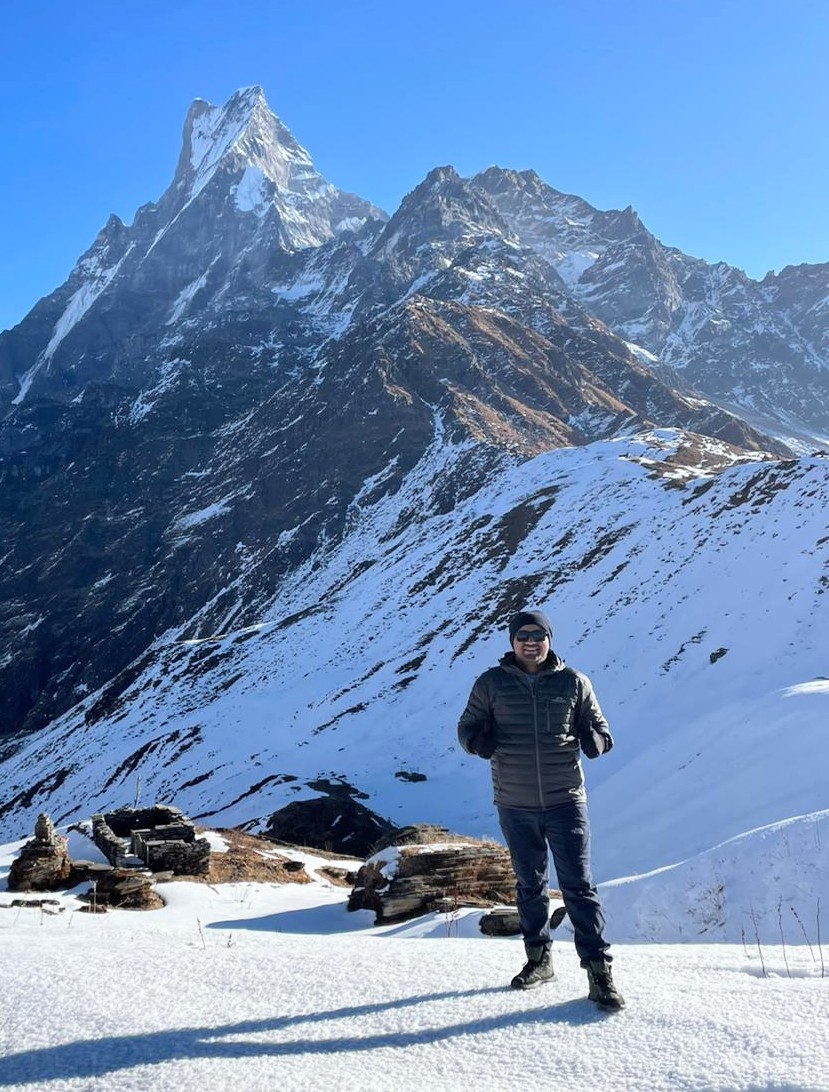
Why Mardi Himal Trek in Winter?
Winter transforms the Mardi Himal into a spectacle distinct from other seasons. Between December and February, you experience:
-
- Unobstructed views of Annapurna, Machhapuchhre, and Mardi peaks with snow-covered summits
-
- Fewer trekkers, allowing for solitude and deeper connection with the landscape
-
- Crystal-clear air ideal for photography and sunrise viewing
-
- Authentic interactions with local communities less accustomed to heavy tourist traffic
5-Day Mardi Himal Trek Itinerary: Day-by-Day Breakdown
Day 1: Gateway to the Foothills | Pokhara to Pitam Deurali
Our expedition commences at 8:00 AM from Lakeside, Pokhara with a scenic 19-kilometer motorized drive to Phedi, the authentic beginning of the trek. From here, the journey takes us upward via traditional stone staircases and well-maintained paths, leading to the charming village of Dhampus. This serves as an ideal lunch and rest point before the afternoon ascent.
The afternoon section covers 9.5 kilometers over five hours through constantly shifting terrain. Dense primordial forests inhabited by endangered rhododendron species alternate with open meadows resonating with endemic Himalayan birdlife. As daylight wanes, we arrive at Pitam Deurali (1,800 meters) to witness the Annapurna massif and the iconic Machhapuchhre (Fish Tail Mountain) bathed in golden evening light.
Accommodation: Tea house in Pitam Deurali
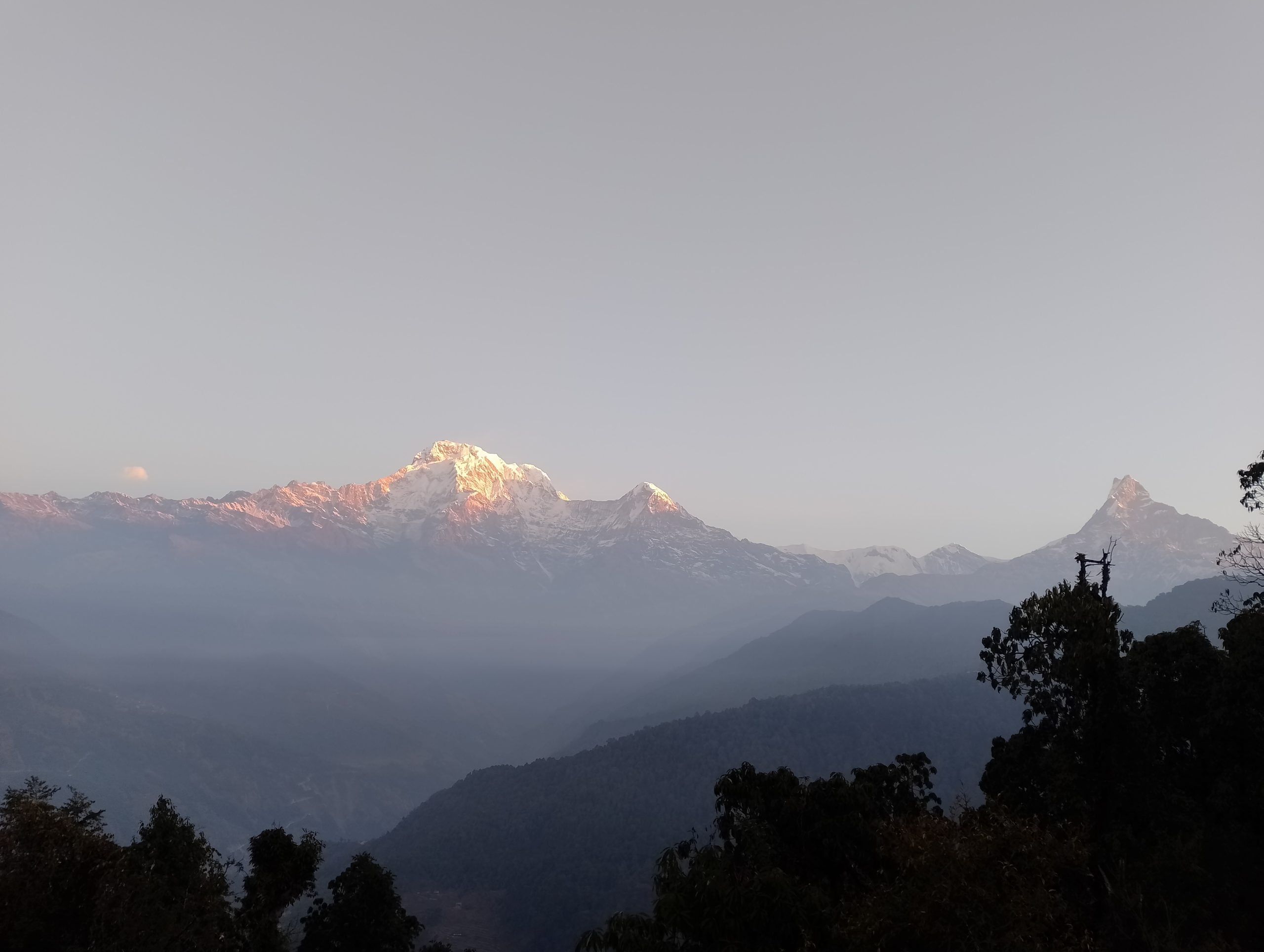
Day 2: Into Alpine Wilderness | Pitam Deurali to High Camp
We begin before dawn breaks across Pitam Deurali, witnessing the first light illuminate the surrounding peaks during breakfast. The challenging ascent toward High Camp proceeds through three distinct segments. The first leg encompasses 9 kilometers through ancient subalpine forest to Forest Camp, requiring 3.5 hours of steady climbing while maintaining focus on the melodious calls of local bird species.
After a restorative tea break, we tackle steep stone steps for 4 kilometers to Low Camp (2,200 meters), consuming approximately 2 hours. Following lunch and acclimatization rest, the final 6-kilometer push spans 3 hours through enchanting rhododendron forests growing increasingly sparse as elevation increases. At Badal Danda, snow appears for the first time, and high-altitude songbirds become our companions.
Accommodation: Tea house in High Camp (3,100 meters) | Early dinner and rest required for 4:00 AM summit departure
Day 3: Summit Day – The Peak Experience | Hike to Mardi Himal Base Camp and back to Badal Danda
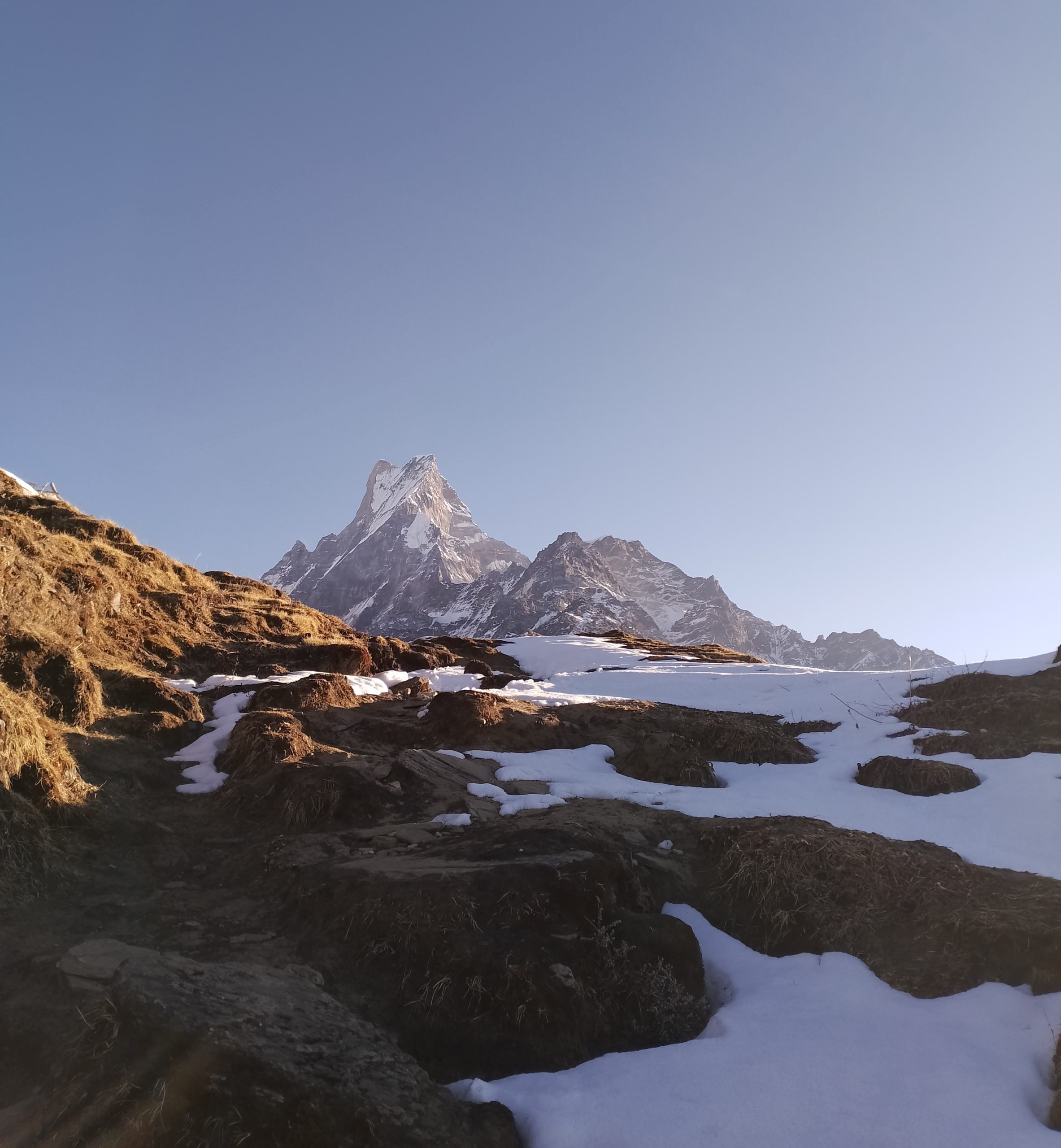
This is the trek’s climactic moment. At 4:00 AM, we begin our final ascent with torches illuminating the snow-covered path. The journey toward Mardi Himal Base Camp (3,580 meters) takes approximately 3.5 hours, during which we traverse increasingly snowy terrain while watching dawn progressively unveil the landscape.
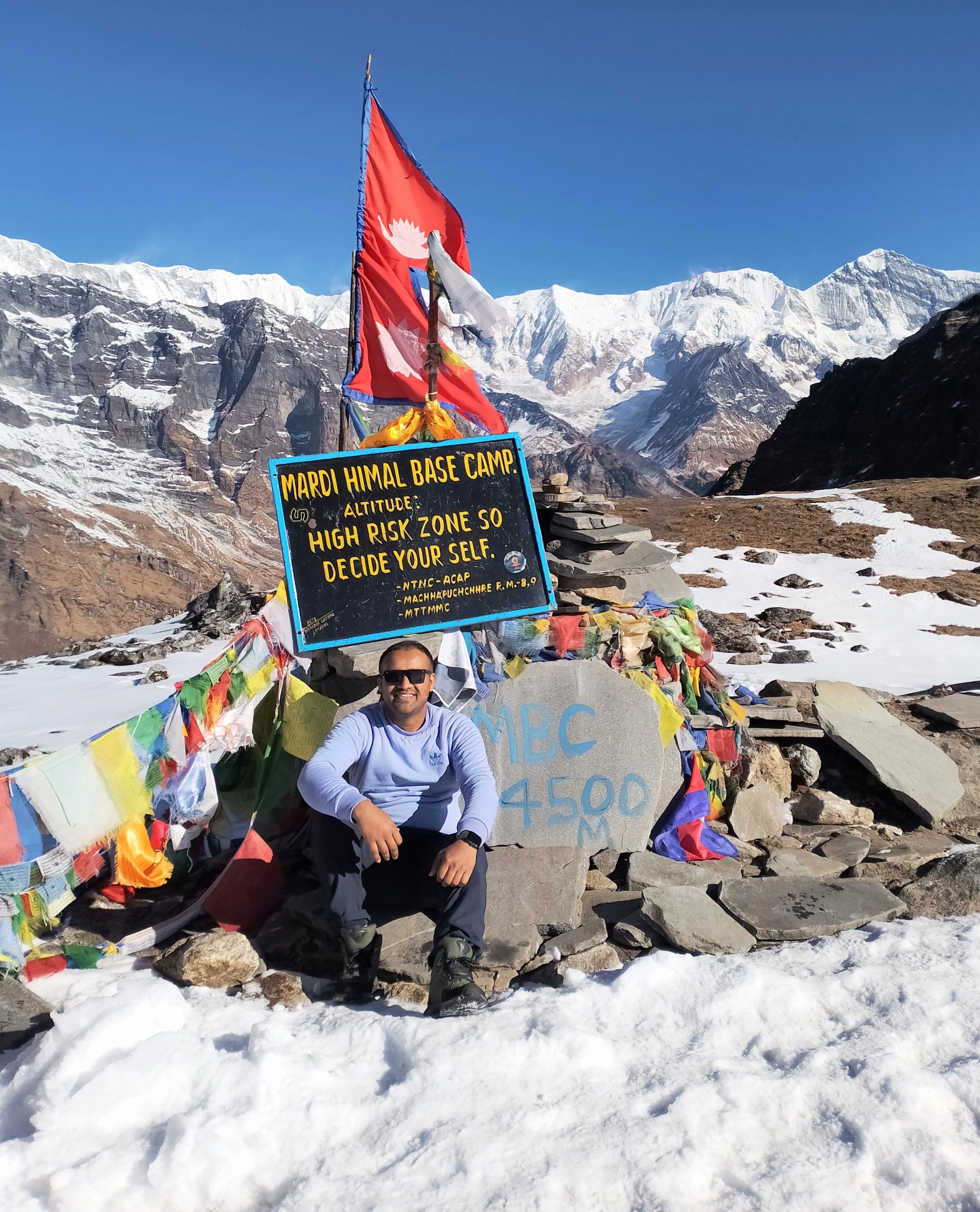
Reaching the summit platform at sunrise produces a transformative moment. The Annapurna Range, Machhapuchhre, and Mardi peak stand in stark relief against morning light, while the entire Pokhara valley remains buried beneath a thick blanket of clouds—creating the profound “above the clouds” sensation that defines this trek. The panoramic 360-degree vista encompasses rarely-seen perspectives of lesser-known peaks alongside famous summits.
We spend 90 minutes absorbing the experience before returning to High Camp for lunch. The afternoon allows for rest and adaptation before descending toward Badal Danda’s scenic ridges.
Accommodation: Tea house in Badal Danda
Day 4: Cultural Descent | Badal Danda to Lwang Village
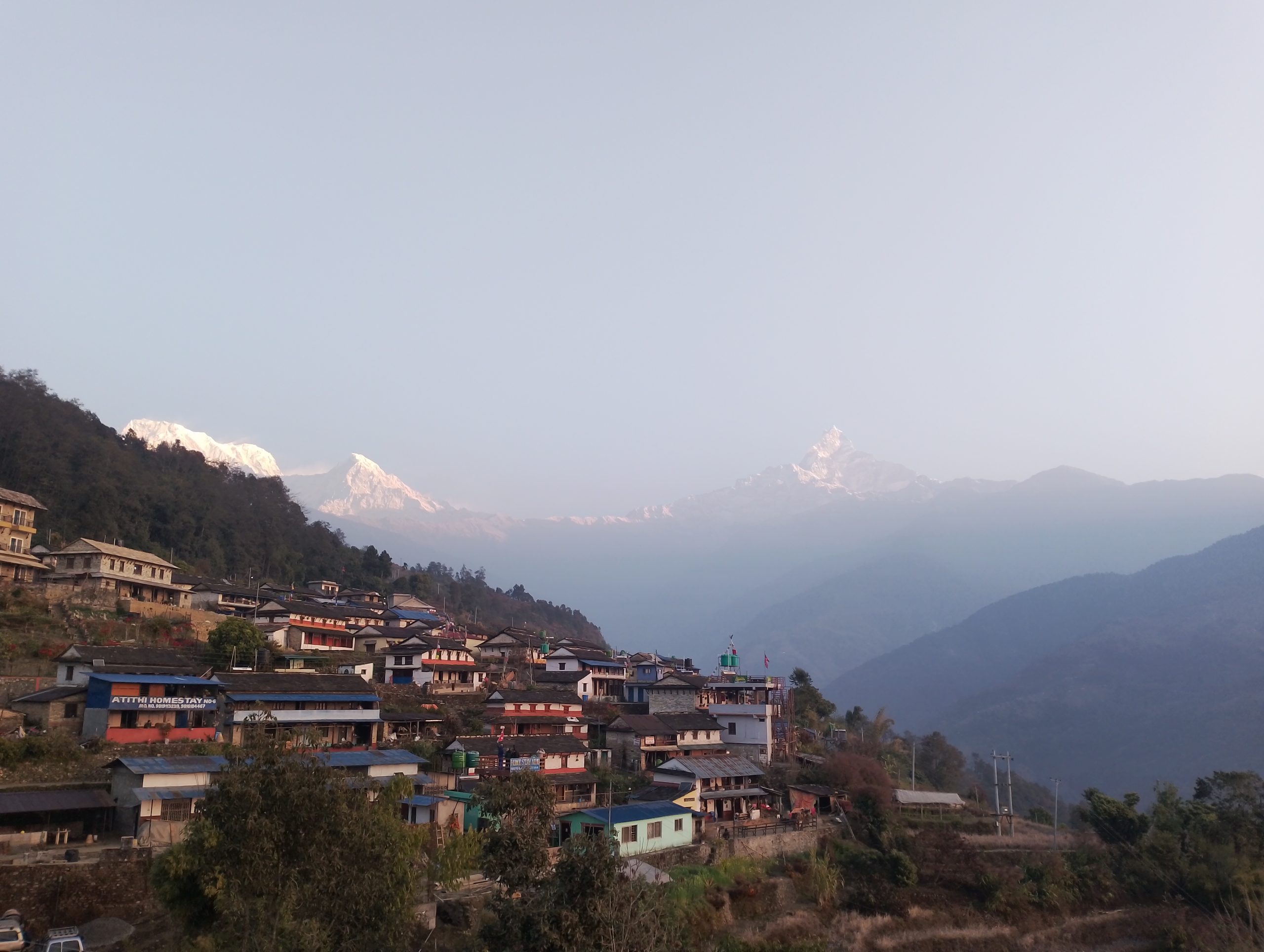
After a final panoramic sunrise reveals the full Annapurna massif, we begin our descent toward the foothills and Lwang Village. This 17-kilometer descent over 6 hours traces a picturesque path through dense montane forests inhabited by Himalayan pheasants, minivets, and sunbirds. The landscape gradually transitions from alpine meadows to dense forest as elevation decreases.
Midday rest occurs at Dod Kharka before continuing to Lwang Village, positioned in Nepal’s renowned tea-growing region. Upon arrival, we explore the historic Lwang tea gardens, learning about traditional processing methods from families who have cultivated these hillsides for generations. We conclude the day sampling fresh tea and purchasing authentic leaf varieties unavailable outside this region.
Accommodation: Tea house in Lwang Village
Day 5: Return to Civilization | Lwang Village to Pokhara
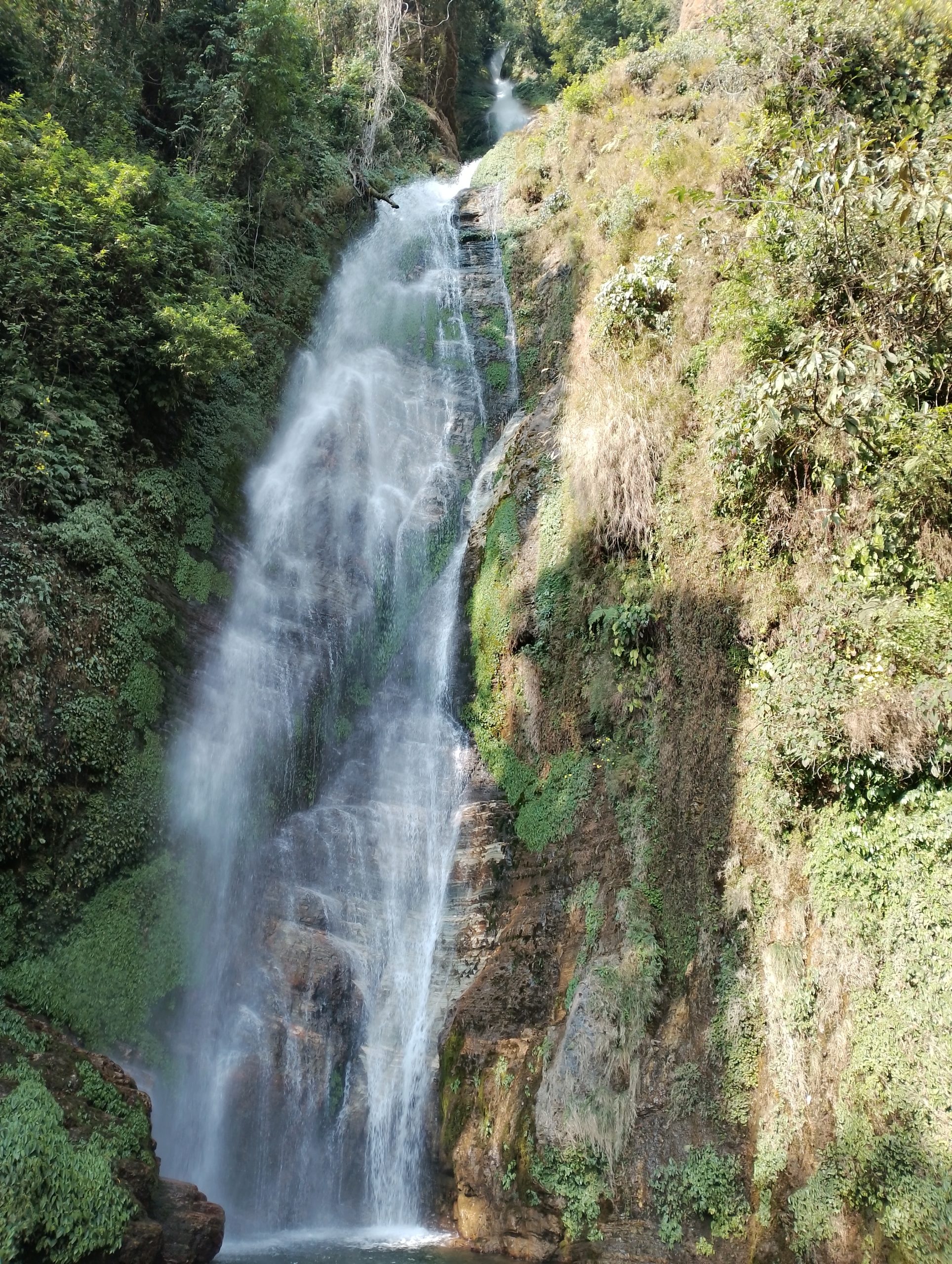
Our final day features a leisurely rhythm, allowing mental consolidation of the journey’s experiences. After breakfast in Lwang’s serene surroundings, we begin a 2-hour, 6-kilometer trek to Lumre, a destination famous for dramatic canyoning opportunities. We visit the nearby waterfall complex, appreciating the water-carved canyons before enjoying a final trail lunch surrounded by natural beauty.
The comfortable 45-minute drive returns us to Pokhara Lakeside, concluding our Mardi Himal adventure with memories of snowy summits, cloud-covered valleys, and authentic Himalayan hospitality.
Essential Winter Trekking Gear: Professional Packing Recommendations
Winter in the Himalayan range proves unforgiving. Temperatures frequently plummet to -8°C (18°F) with persistent wind along exposed ridges. This professionally-curated equipment list ensures safety and comfort:
| Equipment Category | Required Items |
| Outerwear | Down jacket (rated -10°C), windproof outer shell |
| Base Layers | Merino wool thermal layers, fleece insulation jacket |
| Footwear | High-grip trekking boots (insulated) with compatible crampons |
| Sleep System | Sleeping bag rated -15°C with thermal liner |
| Essential Accessories | Aluminum trekking poles, high-SPF sunglasses (snow glare), insulated water bottle |
| Permits | Annapurna Conservation Area Permit (ACAP) and TIMS card |
Nestled in the heart of the Annapurna Conservation Area (ACA) in the Gandaki Province of Nepal, the Mardi Himal Trek is one of the Himalayas’ most rewarding short alpine journeys — a 5-day tea house expedition that blends high-altitude wilderness, biodiversity, and living Gurung mountain culture. Beginning from Pokhara (the lakeside gateway city) and ascending through the Machhapuchhre Rural Municipality, this trail officially opened to trekkers in 2012 and has since established itself as a defining off-the-beaten-path adventure in the Annapurna region.
Permit fees (2026):
- Foreign nationals: NPR 3,000 | SAARC nationals: NPR 1,000 | Children under 10: exempt
- Issued in Kathmandu (NTNC office, Bhrikutimandap/Thamel) or Pokhara (Lakeside, near Tourist Police Station)
- Also available via the NTNC online portal at epermit.ntnc.org.np
Additionally, trekkers entering through the Machhapuchhre Rural Municipality are required to obtain a local entry permit specific to the Mardi Himal trail. This fund goes directly to trail maintenance, sanitation, and local services.
 Tea House Trekking: 5 Days on the Trail
The teahouse accommodations along the trail are simple yet cozy, often family-run, and serve delicious home-cooked Nepali meals such as dal bhat, momo, and Tibetan bread. These teahouses also provide a chance to connect with fellow trekkers from around the world, sharing stories under starlit skies.
The 5-day tea house itinerary follows this high-altitude arc:
| Day | Route | Elevation |
|---|---|---|
| 1 | Pokhara → Deurali | 1,800 m |
| 2 | Deurali → High Camp | 3,550 m |
| 3 | High Camp → Mardi Himal Base Camp → Badal Danda | 4,200 m |
| 4 | Badal Danda → Lwang Village | 1,450 m |
| 5 | Lwang Village → Lumre → Pokhara | 822 m |
Friendly villagers welcome trekkers into family-run tea houses along the trail, serving home-cooked meals and hot drinks beside cozy wood-burning stoves. Conversations with lodge owners and fellow travelers often spark lasting connections
 Flora: A Living Botanical Corridor
The path winds through old moss-covered rhododendron forests, primordial forests and narrow ridges that rise high into the sky. In the spring (March–May), the flowers turn bright pink and red.
The trail transitions through distinct ecological zones:
- Lower subtropical belt — oak, maple, alder, and hemlock
- Temperate mid-zone — dense rhododendron (Rhododendron arboreum, Nepal’s national flower), bamboo, and mossy broadleaf forest
- Sub-alpine transition — dwarf juniper, alpine shrubs, and lichen-covered boulders
- High alpine — bare rocky ridgelines above 3,500 m
The Annapurna Conservation Area as a whole protects over 1,226 species of flowering plants across its 7,629 square kilometres.
 Fauna: Himalayan Wildlife Encounters
Along the forest-to-alpine transition zone, trekkers may spot Himalayan Thar, barking deer, pheasants, and eagles.
Other notable wildlife of the ACA corridor includes:
- Danfe / Himalayan Monal (Lophophorus impejanus) — Nepal’s national bird, often seen near the tree line
- Musk deer — elusive residents of dense forest zones
- Red panda — spotted in rhododendron and bamboo belts at mid-elevation
- Snow leopard — apex predator of the higher alpine reaches
- Rare wildlife including the elusive snow leopard, Himalayan black bear, and musk deer roam the more remote areas of the ACA.
Birdwatchers will find the Forest Camp to Low Camp section especially rewarding, with diverse calls echoing through the canopy at dawn.
 Gurung Culture: Living Heritage of the Annapurna Highlands
The Mardi Himal trail passes through the ancestral heartland of the Gurung people (Tamu in their own language), one of Nepal’s most storied indigenous ethnic groups.
The Gurung people are an ethnic group known for their bravery as Gurkha soldiers and their rich cultural heritage, well civilisation, including folk songs, dances, and Buddhist traditions.
Key cultural touchpoints along the trail include:
- Lwang Ghalel — a self-sufficient Gurung village known for agritourism, canyoning, and traditional homestays
- Siding Village — a traditional Gurung settlement where locals farm organically and practice Buddhism, with prayer flags, mani walls, and old-style stone homes
- Dhampus & Pothana — gateway villages with panoramic views and warm hospitality
- Ghandruk (nearby) — a UNESCO-recognised heritage village with a Gurung museum
People are mostly Buddhist and celebrate Loshar as their main festival. The main occupation is farming, though many villagers are now also involved in hospitality services due to the growth of trekking tourism.
When trekking through Forest Camp, you are not just walking — you are supporting local livelihoods and helping preserve centuries-old culture.
 Key Geo & Entity Reference
| Entity | Type | Detail |
|---|---|---|
| Mardi Himal | Mountain Peak | 5,587 m, Annapurna Massif |
| Machhapuchhre (Fishtail) | Sacred Peak | 6,993 m, prohibited summit |
| Annapurna South | Peak | 7,219 m |
| Annapurna Conservation Area | Protected Zone | 7,629 km², est. 1986 |
| NTNC | Issuing Authority | National Trust for Nature Conservation |
| Pokhara | Gateway City | Gandaki Province, Nepal |
| Gurung / Tamu | Ethnic Group | Indigenous highland community |
| Loshar | Cultural Festival | Gurung New Year celebration |
 Why This Trek Stands Apart (Originality Statement)
Unlike the commercially dense Annapurna Base Camp or Everest Base Camp trails, the Mardi Himal route offers an intimate, crowd-free corridor through a living landscape where ecology, ethnography, and adventure converge. You sleep in family-owned tea houses rather than resort lodges. You walk through forests that predate modern Nepal. You share meals with Gurung families whose ancestors served in Gurkha regiments across the world — and whose children now guard this mountain heritage through sustainable tourism.
The ACAP permit is not merely a document. It is your entry into a conservation covenant — one that funds the very trails you walk, the wildlife you encounter, and the culture you experience.
Post-Trek Recovery: Making the Most of Pokhara
Following the trek’s completion, Pokhara serves as the ideal destination for physical and mental recovery. Nepal’s second-largest city offers diverse activities suited to various recovery preferences:
Adventure Activities
-
- Paragliding above Fewa Lake with unobstructed Himalayan backdrops; zip-lining through forested valleys; bungee jumping from BhoteKoshi River cliff
Culinary Recovery
-
- Himalayan Java: Premium specialty coffee roasted on-site, offering international quality in the Himalayan foothills
-
- Pokhara Thakali Kitchen: Authentic Nepali cuisine featuring unlimited Thali servings, the traditional farmer’s platter combining rice, vegetables, lentils, and protein
Physical Recovery
-
- Professional trekking massage from certified therapists specializing in altitude-related muscle tension and recovery
Spiritual Connection
-
- The Arati ceremony at Tal Barahi Temple (lakeside Hindu temple) at sunset provides spiritual contemplation of your mountain journey while honoring local religious traditions
Altitude Sickness on the Mardi Himal Base Camp Trek
The Mardi Himal Base Camp Trek ascends from Pokhara (827 m / 2,713 ft) through Forest Camp (2,520 m), Low Camp (2,985 m), Middle Camp (3,550 m), and High Camp (3,973 m), reaching Mardi Himal Base Camp at 4,500 m (14,764 ft). This rapid elevation gain makes Acute Mountain Sickness (AMS) a genuine concern, particularly above 3,000 m where oxygen levels drop significantly.
Symptoms of AMS include throbbing headache, nausea, fatigue, dizziness, and disturbed sleep. In severe cases it can progress to High Altitude Cerebral Edema (HACE) — causing confusion and loss of coordination — or High Altitude Pulmonary Edema (HAPE), which involves breathlessness and fluid in the lungs. Both HACE and HAPE are medical emergencies requiring immediate descent.
Prevention centres on ascending slowly — no more than 300–500 m of sleeping altitude gain per day above 3,000 m. An acclimatisation day at Middle Camp (3,550 m), where trekkers hike up to High Camp and return to sleep lower, is strongly recommended. Drinking 3–4 litres of water daily, avoiding alcohol, eating light carbohydrate-rich meals, and monitoring blood oxygen with a pulse oximeter are all essential habits. A reading below 80% SpO2 at High Camp warrants rest or descent.
Treatment Medications every trekker should carry include Acetazolamide (Diamox) 125–250 mg twice daily — the only clinically proven AMS preventive, started 1–2 days before ascending — along with Ibuprofen or Paracetamol for headache relief and Ondansetron for nausea. For emergencies, Dexamethasone 4 mg is used to treat HACE, and Nifedipine 30 mg is carried for HAPE. These prescription medications should be obtained and discussed with a doctor before the trek.
The golden rule remains simple: never ascend with AMS symptoms, and descend immediately if symptoms worsen. Even a drop of 300–500 m in elevation can be life-saving. With a careful itinerary, good hydration, and the right medication kit, most trekkers complete this spectacular route safely.
FAQ: Mardi Himal Trek
How long is the Mardi Himal Base Camp Trek?
The Mardi Himal Base Camp Trek covers 68 kilometers and takes 5 days to complete, starting and ending in Pokhara.
What is the highest point of the Mardi Himal Trek?
The highest point is Mardi Himal Base Camp at 3,580 meters (11,745 feet), reached on Day 3 of the itinerary.
What time do you start the summit day on Mardi Himal Trek?
Summit day begins at 4:00 AM from High Camp (3,100m), taking approximately 3.5 hours to reach Mardi Himal Base Camp at sunrise.
Is Mardi Himal Trek good in winter?
Yes. December to February offers unobstructed mountain views, snow-covered terrain, fewer crowds, and crystal-clear skies — making winter one of the best seasons for this trek.
What permits do I need for Mardi Himal Trek?
You need two permits: the Annapurna Conservation Area Permit (ACAP) and a TIMS (Trekkers’ Information Management System) card. Both can be obtained in Pokhara before the trek.
Where does the Mardi Himal Trek start?
The trek starts from Phedi, a 19-kilometer drive from Lakeside, Pokhara. The first day’s trekking begins at Phedi and ends at Pitam Deurali (1,800m).
Are there tea houses on the Mardi Himal Trek?
Yes. Tea houses are available at every overnight stop — Pitam Deurali, High Camp, Badal Danda, and Lwang Village — providing accommodation and meals throughout the route.
How cold does it get on the Mardi Himal Trek in winter?
Temperatures drop to around −8°C (18°F) on exposed ridges, with persistent wind chill at higher elevations. A sleeping bag rated to −15°C is recommended.
What is the best sleeping bag rating for Mardi Himal in winter?
A sleeping bag rated to −15°C with a thermal liner is recommended, as tea houses at elevation (3,100m+) are unheated.
What shoes do I need for Mardi Himal Trek in winter?
Insulated, high-grip trekking boots with compatible crampons are essential, especially above Badal Danda where snow and ice are common on the trail.
Can beginners do the Mardi Himal Trek?
Yes. The trek is suitable for first-time trekkers looking to build high-altitude capability, as well as experienced mountaineers. The 5-day structure allows for gradual acclimatization.
How does Mardi Himal compare to Everest Base Camp or Annapurna Circuit?
Mardi Himal delivers a comparable mountain experience in just 5 days, versus the 10–14 days required for Everest Base Camp or Annapurna Circuit — making it ideal for trekkers with limited time.
What wildlife can you see on the Mardi Himal Trek?
The trail passes through forests inhabited by Himalayan pheasants, minivets, and sunbirds. Higher elevations feature high-altitude songbirds along the ridgeline.
What views do you get from Mardi Himal Base Camp?
A 360-degree panorama including the Annapurna Range, Machhapuchhre (Fish Tail Mountain), Mardi peak, and the Pokhara valley below the cloud line — creating the signature “above the clouds” experience.
What is special about Lwang Village on the Mardi Himal Trek?
Lwang Village sits in Nepal’s tea-growing region. Trekkers can visit the historic Lwang tea gardens, learn traditional processing methods from local families, and buy authentic tea varieties not available outside the region.
Final Thoughts: Why Mardi Himal Deserves Your Winter
The Mardi Himal Trek represents an uncommon equilibrium in the Himalayan trekking landscape. Unlike Everest Base Camp or Annapurna Circuit trekking routes requiring 10-12 days minimum commitment, Mardi Himal delivers comparable mountain experience within a condensed 5-day timeframe. Winter completion ensures pristine snow, clear vistas, and profound solitude.
The integration of challenging alpine terrain with welcoming tea-house hospitality appeals to diverse trekker demographics. Whether you are a first-time trekker establishing high-altitude capability or a seasoned mountaineer seeking a winter challenge without expedition-scale commitment, Mardi Himal satisfies both audiences.
Begin your winter adventure today. December through February represents the optimal window for pursuing this transformative journey through Nepal’s Himalayan realm.