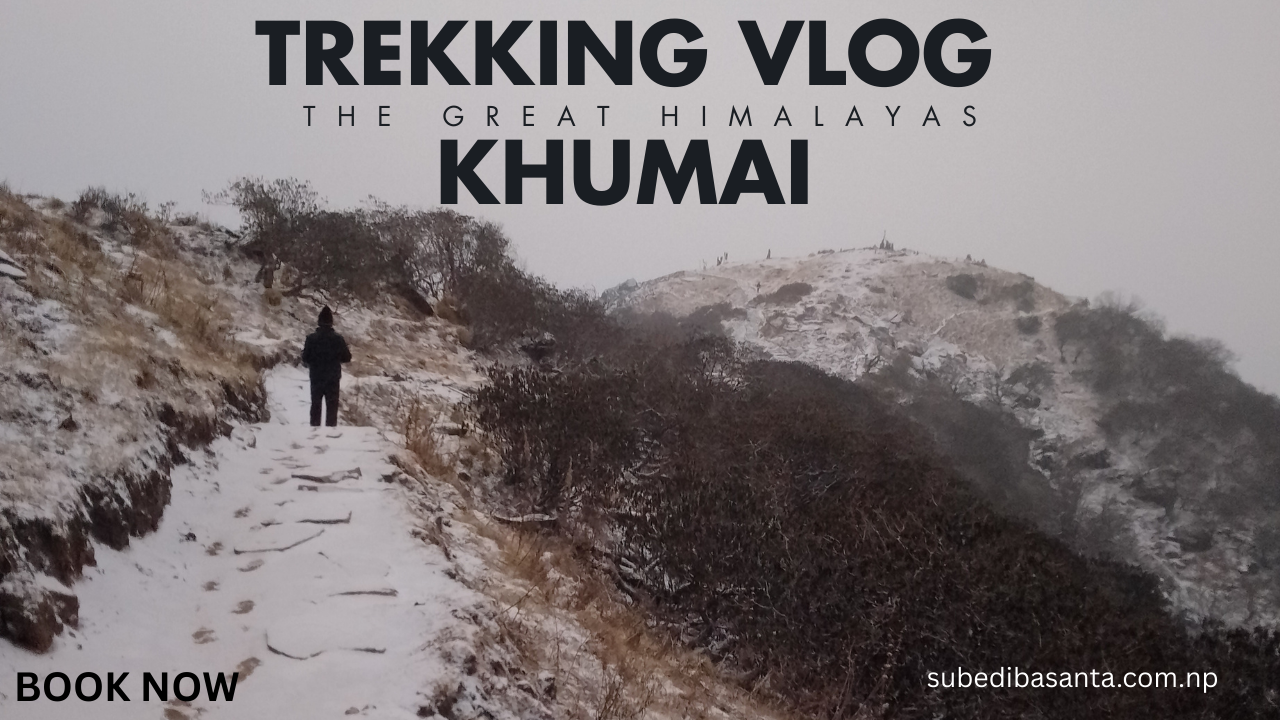
A serene, crowd-free trail above Pokhara offering close-range panoramas of Machhapuchhre (Fishtail), Annapurna South, and Hiunchuli – without the queues of the Poon Hill circuit. A complete 3-day trekking guide through Gurung villages, rhododendron forests, and the silent ridgelines above 3,600 m – where the Annapurna Himalaya belongs entirely to you.
Max Elevation3,682 m
Total Distance36 km
DifficultyModerate
Trek Duration3 Days
Tucked in the Kaski District of Gandaki Province, Khumai Danda (खुमाई डाँडा) is a forested ridgeline rising southeast of Pokhara city. Unlike the heavily trafficked Annapurna Base Camp or Ghorepani-Poon Hill routes, this trail remains delightfully undervisited – you’ll share the dawn light over the Annapurna massif with a handful of local herders, not a hundred other trekkers.
The route connects traditional Gurung and Magar villages, passes through dense rhododendron and oak forests, and rewards hikers with expansive 180° views of the central Annapurna Himalaya – all within a day’s drive of Pokhara’s Lakeside district.
Personal Account – First-Hand Experience
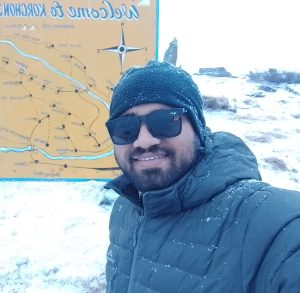
Trekked Khumai Danda-Khorchon in January. Conditions, flora, and cultural notes verified against local guides and the Annapurna Conservation Area Project (ACAP).
Most trekkers leave Pokhara and turn toward the Annapurna Sanctuary or the Circuit. Almost none of them turn toward Ghachowk. That quieter road leads to one of the most rewarding ridge walks in the entire Gandaki Province — and I walked it almost entirely alone.
The Khumai Danda Trek is a 3-day circuit beginning and ending near Pokhara (800 m), climbing through the Gurung heartland of Ghachowk village, ascending dense rhododendron and oak forest to the high pastoral camp of Hile Kharka, and cresting at Khorchon (3,682 m) — a ridgeline viewpoint with unobstructed sightlines to Machhapuchhre (6,993 m) and the Annapurna massif. What separates it from its more famous neighbours is not the elevation — it is the silence. On the Khumai ridge in January, with new snow on the ground and cloud shadows moving across the Annapurna South face, I counted zero other trekkers over three days.
This guide covers everything you need: the day-by-day itinerary with elevation and distance data, the wildlife and flora of the Annapurna Conservation Area (ACAP) along this route, the Gurung cultural heritage of the Ghachowk corridor, and the practical information — permits, accommodation, gear, and connectivity — that most blogs leave out.
Khumai Danda Trek — Essential Facts
Starting Point
Lakeside, Pokhara (800 m)
High Point
Khorchon Ridge (3,682 m)
Total Trek Distance
~36 km over 3 days
Best Seasons
Spring (Mar–May) & Autumn (Oct–Nov)
Permits Required
ACAP Permit + TIMS Card
Accommodation
Community teahouses & camping
Connectivity
Weak above Ghachowk – carry cash
Nearest City
Pokhara (45 min jeep to trailhead)
Day-by-Day Route
3-Day Khumai Danda Itinerary
Day 01
Pokhara → Ghachowk → Hile Kharka
Start800 m
End2,200 m
Trek Distance7 km
Walking Time~3 hrs
Drive to Trailhead45 min jeep
We left Lakeside early, driving 17 kilometres through the terraced fields of the Seti Gandaki basin to reach Ghachowk village (1,270 m) – a traditional Gurung settlement whose stone houses and slate-roofed gompas speak to a community whose cultural ties stretch back to the ancient Tamu Pye Lhu Sangh tradition of Gurung shamanism. After a dal bhat lunch in the village, we shouldered our packs and stepped onto the trail.
The first day is deliberately unhurried. The path climbs through mixed oak (Quercus semecarpifolia) and rhododendron (Rhododendron arboreum) forest – the same deep-green corridor that erupts in crimson and white during spring – keeping you well shaded even during the steeper sections. Small tributaries of the Madi Khola cross the path at intervals, their sound a constant companion. By mid-afternoon, the forest opens onto the pastoral clearing of Hile Kharka (2,200 m), where the community teahouse sits at the edge of a meadow with the first unobstructed views of the ridgeline above.
 Insider Tip
Spend 20 minutes in Ghachowk before starting the trek. The Gurung community here maintains a small cultural centre — local guides can explain the Tamu Lhosar festival calendar and, in season, point you to the best rhododendron viewpoints above the village.
Day 02
Hile Kharka → Khumai Danda → Khorchon
Start2,200 m
Khumai Camp3,245 m
End3,682 m
Trek Distance11 km
Walking Time~6 hrs
This is the defining day of the trek. The trail leaves the treeline and enters an increasingly open ridge system, where the horizon expands with every 100 metres of elevation gained. Between 2,200 m and 3,000 m, the forest canopy is particularly rich in spring, when the blooms of Rhododendron campanulatum and Rhododendron barbatum create a layered canopy of deep pink and white. Year-round, the dense understorey provides habitat for the Himalayan Monal (Lophophorus impejanus) – Nepal’s national bird – whose iridescent plumage is unmistakable when it crosses open ground in the early morning light.
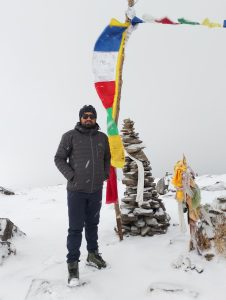
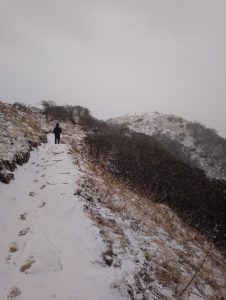
Above Khumai Danda camp (3,245 m), the vegetation transitions to alpine scrub and open grassland – the classic high-altitude meadow environment of the ACAP zone. In winter, this terrain is transformed: the morning I crossed this section in January, the meadows were blanketed in fresh snow, the silence absolute except for the occasional distant alarm call of a Himalayan Marmot (Marmota himalayana). Reaching Khorchon ridge (3,682 m) in the late afternoon, the air thin and clean, the Annapurna South (7,219 m) and Machhapuchhre (6,993 m) were directly ahead – and there was no one else there to see them.
Insider Tip
Rest at the Khumai Danda camp (3,245 m) for at least 40 minutes before pushing to Khorchon. The altitude gain from Hile Kharka is significant enough to cause mild AMS symptoms if rushed. Eat, hydrate, and let your body adjust – the ridge views at Khorchon will reward the patience.
Day 03
Khorchon → Ghachowk → Pokhara
Start3,682 m
End1,270 m
Trek Distance18 km
Walking Time~6 hrs
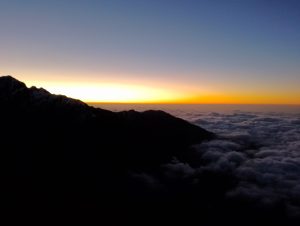
At Khorchon in January, morning arrives as a slow brightening behind the Annapurna massif — and then the snow begins. What started as a light dusting became a sustained snowfall that lasted well into the morning, coating the ridgeline and the distant Fishtail peak in fresh white. It was the most unexpectedly beautiful morning of the trek, and a reminder that Khumai Danda in winter is a completely different — and genuinely spectacular – experience from the spring and autumn visits most guides describe.
The 18-kilometre descent to Ghachowk is long but not brutal. Your lungs, back at pressure, feel almost effortlessly efficient. The descent retraces the ascent route through the rhododendron corridor, passing through Khumai camp and back into the Gurung villages below – where, on our return, we stopped for tea with a family in Ghachowk and were invited to see the family’s altar, decorated for an upcoming Tamu Lhosar celebration. That half-hour in a stone kitchen, warming our hands on clay cups, was the quiet heart of the entire journey. Use trekking poles on the descent – 18 km of downhill is harder on the knees than it looks on paper.
Insider Tip
If your timing allows, plan your arrival back in Ghachowk to coincide with late afternoon. The Seti Gandaki valley light at that hour – golden, angled, catching the terraces – is a photographer’s gift that most trekkers miss by rushing back to Pokhara.
Ecosystem & Heritage
Wildlife, Flora & Gurung Culture Along the Route
The Khumai Danda corridor falls within the Annapurna Conservation Area (ACAP) – a 7,629 km² protected zone managed by the National Trust for Nature Conservation (NTNC) and the largest protected area in Nepal. The range of ecosystems encountered between Ghachowk (1,270 m) and Khorchon (3,682 m) – from subtropical forest fringe to high alpine grassland – supports a correspondingly diverse range of species.
 Flora Highlights
-
- Rhododendron arboreumNepal’s national flower; crimson blooms at 2,000–3,500 m in spring
-
- Rhododendron campanulatumWhite-violet blooms above 3,000 m; dominant on upper ridges
-
- Quercus semecarpifoliaHigh-altitude Himalayan oak forming the lower forest canopy
-
- Himalayan Blue PoppyMeconopsis spp.; rare; found in shaded alpine zones in spring
 Wildlife Highlights
-
- Himalayan MonalLophophorus impejanus — Nepal’s national bird; common in upper forest
-
- Red PandaAilurus fulgens — Endangered; in bamboo zones, typically dawn/dusk
-
- Himalayan MarmotMarmota himalayana — Active spring–autumn; hibernates in winter
-
- Blood PheasantIthaginis cruentus — High-altitude meadows near Khorchon
The Gurung People of Ghachowk
Ghachowk is one of the best-preserved Gurung (Tamu) settlements in the Pokhara Valley. The Gurung are a Tibeto-Burman people whose traditional religious practice, Pye Lhu Srinmu (Gurung shamanism), coexists with Tibetan Buddhism – a spiritual duality visible in the village’s both the clan shrines and the Buddhist gompa at the settlement’s upper edge. In spring, the village observes Tamu Lhosar (Gurung New Year, typically in December-January by the Gregorian calendar) and participates in the broader regional celebrations of Holi and Buddha Jayanti. For trekkers arriving with curiosity and respect, Ghachowk offers a far more authentic cultural encounter than the tourist-oriented villages of the main Annapurna circuit.
Practical Information & Gear
Permits
-
- →ACAP (Annapurna Conservation Area Permit) – obtainable in Pokhara at the ACAP office or online via Department of National Parks and Wildlife Conservation (DNPWC)
-
- →TIMS Card (Trekkers’ Information Management System) – required for all trekking routes in Nepal
-
- →Both permits require a valid passport and passport-size photos
Gear Essentials
-
- →Sleeping bag rated to at least -10°C (Khorchon drops well below freezing in winter)
-
- →Down jacket + waterproof outer layer
-
- →Trekking poles (essential for 18 km descent on Day 3)
-
- →Sturdy trekking boots with ankle support
-
- →Thermal base layers, gloves, and beanie
-
- →Water purification tablets or filter
Logistics & Money
-
- →Mobile network is weak above Ghachowk — NTC has slightly better coverage than Ncell in this corridor
-
- →Carry sufficient Nepali Rupees in cash — no ATMs or card facilities beyond Pokhara
-
- →Teahouses are community-run and basic; meals are simple but adequate (dal bhat, noodles, eggs)
-
- →Jeep hire from Pokhara to Ghachowk: negotiate in advance; approx. NPR 3,000–5,000
Best Time to Trek
-
- →Spring (March–May):Rhododendron bloom, clear morning skies, mild temperatures at altitude. Best for flora and photography.
-
- →Autumn (Oct–Nov):Exceptional mountain visibility after monsoon, stable weather, cool and dry conditions. Best for ridge views.
-
- →Winter (Dec–Feb):Cold and snowy above 3,000 m but strikingly beautiful and completely uncrowded – the experience I had. Requires winter sleeping bag and snow gaiters.
Khumai Danda Trek – FAQ
Is the Khumai Danda Trek suitable for beginners?
Yes, with caveats. The moderate rating is accurate for trekkers with reasonable fitness – the daily distances are manageable and no technical climbing is involved. However, Day 2 involves a sustained climb to 3,682 m, which requires good pacing and awareness of altitude sickness (AMS) symptoms. First-time high-altitude trekkers should ascend slowly and not skip the rest stop at Khumai Danda camp.
How does Khumai Danda compare to the Annapurna Sanctuary Trek?
The Annapurna Sanctuary (ABC) Trek takes 7–12 days and reaches 4,130 m, offering closer views of the Annapurna inner sanctum. Khumai Danda is a 3-day alternative for trekkers with limited time, offering comparable ridge views of the Annapurna South face and Machhapuchhre at a fraction of the footfall. If you have a week or more, ABC is the stronger experience; if you have 3–4 days and value solitude, Khumai Danda wins.
The Khumai Danda Trek is one of the best short treks in the Annapurna Region, often compared with routes like the Annapurna Base Camp and Mardi Himal Trek
Is it possible to do the Khumai Danda Trek without a guide?
The lower sections of the trail (Ghachowk to Hile Kharka) are reasonably well-marked and manageable independently. Above Khumai Danda toward Khorchon, trail marking becomes sparse – particularly in winter when snow can obscure the path. Hiring a local guide from Ghachowk is strongly recommended for first-time visitors and adds significant cultural value to the experience. Local guides typically charge NPR 1,500–2,500 per day.
What is the best month to see rhododendrons on Khumai Danda?
Late March to mid-April is peak rhododendron season between 2,000 m and 3,500 m along this route. Rhododendron arboreum (crimson) blooms first at lower elevations in early March, while Rhododendron campanulatum (white-violet) peaks at higher elevations through April. A trek timed for the first week of April typically catches both species in bloom simultaneously.
Can the trek be done in 2 days?
A fast, fit trekker could compress the itinerary to 2 days by combining Days 1 and 2, camping at Khorchon and descending on Day 2. However, this is not recommended – the altitude gain on a combined Day 1/2 would be significant and increases AMS risk. The 3-day structure exists for good physiological reasons, and the middle day (Hile Kharka to Khorchon) deserves to be taken at its own pace.
Tips for a Safe Journey
Start early each morning. Mountain views above 2,000m in the Pokhara region are frequently obscured by cloud after 10–11 AM, especially in spring. Plan to reach your high viewpoint by 7 AM for reliable panoramas.
Carry cash in Nepali rupees. There are no ATMs beyond Lahachowk. Teahouses accept cash only. Budget approximately NPR 2,000–3,500 per day for meals and lodging on the trail.
Hydration and altitude. Though Khumai Danda tops out below 3,000m — well beneath the threshold for serious altitude sickness — a slow ascent and 3–4 litres of water daily remain important, particularly in the dry post-monsoon season.
Respect local customs. The route passes through communities of the Gurung (Tamu) ethnic group, one of Nepal’s most celebrated mountain peoples. Remove shoes before entering homes, walk clockwise around mani stones and chortens, and ask permission before photographing villagers.
Travel insurance is non-negotiable. Ensure your policy covers trekking above 2,500m and helicopter evacuation from remote terrain in Kaski District.
Final Thoughts
The Mountain Belongs to Those Who Come Off-Season
Most trekking guides will tell you to go to Nepal in spring or autumn. They’re right – the weather is better, the views are more reliable, and the rhododendrons in spring are genuinely one of Asia’s great natural spectacles. But the morning I stood on Khorchon ridge in a January snowfall, alone with Machhapuchhre directly in front of me and fresh tracks in the snow behind me, I understood something that no guidebook had told me: the Himalayas in winter have a quality that crowds cannot coexist with.
“The Himalayas don’t get quieter as you climb – they get more specific.”
The Khumai Danda Trek is not the most dramatic trek in Nepal. It doesn’t touch the height of the Thorong La, the glacial grandeur of the Khumbu, or the cultural depth of Mustang. What it does – exceptionally well, for three days, starting an hour from Pokhara – is give you the specific feeling of a mountain belonging to you. That is rarer than it should be, and worth every step.
Recommended Season 01
Spring: March – May
Rhododendron bloom, Gurung cultural festivals, and crisp post-winter clarity on the Annapurna ridgeline. Best for first-time visitors and nature photography.
Recommended Season 02
Autumn: October – November
The cleanest mountain visibility of the year, post-monsoon green valleys, and stable daytime temperatures above 3,000 m. Best for panoramic views of the Annapurna massif.